Rail - Changing workforce demand
Australia’s rail system is being transformed through record investment in new infrastructure, trains and modern digital technologies.
Over the next decade, an estimated 70,000 additional workers will be needed to build, operate and maintain the nation’s expanding rail networks — including more than 13,000 digital-specific roles to support new signalling and control systems.
Currently, networks set their own workforce training and skills requirements, and qualifications are not always recognised across jurisdictions. This limits worker mobility and makes it harder to share skilled staff between networks.
Through the National Rail Action Plan (NRAP), the NTC is bringing together governments, industry and the skills sector to take a national approach to building the rail workforce Australia needs — now and into the future. The NTC is:
- working with the rail industry to identify the specific skills needed to meet future workforce demand
- developing a national curriculum to support the rollout of digital train control and signalling technologies
- helping scale up initiatives that attract and support a more diverse rail workforce, creating new pathways for people to start and grow their careers in rail.
Growing digital rail skills
By 2027, nearly 40 percent of existing rail workers will be affected by digital technologies.
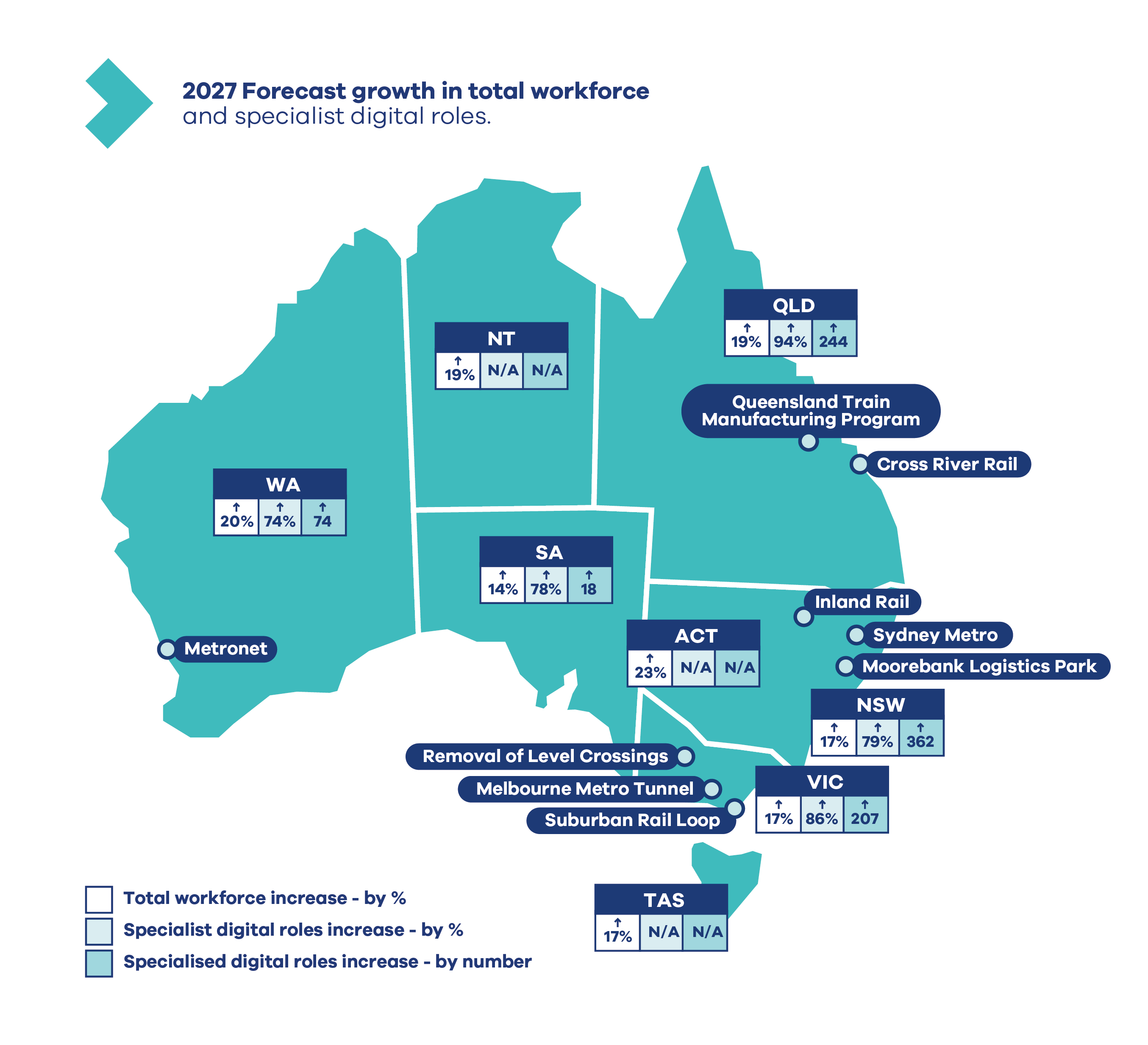
Digital skills vary across the rail workforce today.
As rail transforms through new signalling technologies and communications, more workers with a wide range of skills will be needed to keep our trains running.
A Future Skills Framework identified the 16 critical roles and skills needed to build, run and maintain a better rail system. We are now working with industry on agreed training so we can develop a national skills base.
Critical rail roles needed over the next five years
| Engineering roles | Non-engineering roles |
| Software Engineer | Project Manager |
| Assurance Engineer | ICT Security Specialist |
| Signal Engineer | Train Controller |
| Track Engineer | Signal Electrician |
| Battery Engineer | Train Driver |
| Project Engineer | Data Analyst |
| Electrical Engineer | Data Scientist |
| Mechanical Engineer | Sustainability Adviser |
The framework also identifies other social and cognitive skills that all workers will need as changes to the sector affect their day-to-day tasks.
Adaptive skills include:
- Digital literacy
- Critical thinking
- Problem solving
- Learning agility
- Teamwork and collaboration
Through NRAP, we are building nationally recognised learning pathways in all areas that support the interoperability of our rail system. To start with we are:
- developing a national curriculum for digital train control systems.
- working with the Australasian Railway Association (ARA) and Industry Skills Australia (ISA) to develop common role titles, responsibilities and other elements that support mutual recognition of rail workers’ skills. This will make it easier for workers to move across networks and support the interoperability of our rail system.
- working with TAFE and industry to deliver a rail cybersecurity program to address critical skills gaps across the sector and increase TAFE's delivery of training services to our industry.
Creating a more inclusive and diverse industry
Many of the skills Australia’s rail sector needs are in high demand around the world. To compete for this talent, rail must show that it offers flexible, welcoming and inclusive workplaces where people can thrive.
Individual rail organisations have already made strong progress in this area.
The NTC has coordinated a national expansion of Victoria's state-based accredited rail in secondary schools program. ISA is now developing a nationally recognised Certificate II in Rail Fundamentals (Pre-Vocational). This will create a clear, consistent pathway for secondary school students and others intereseted in exploring rail industry careers.
By exposing students to career opportunities in rail from a young age, we can inspire people from a wider range of backgrounds to consider a future in the industry.
How to participate
If you'd like to find out more about how we are helping to align digital train control technologies send us an email or subscribe to our monthly newsletter here.
To make a formal submission in response to our discussion papers you can find out more here.
- Log in to post comments