
Latest news
Initial consultation on the review of the 2022 Edition of the Assessing Fitness to Drive Standards closed on Friday 17 July 2026.
Thanks to everyone who provided feedback. The NTC will now review the submissions and other feedback received to identify key stakeholder issues, opportunities for improvement and evidence to inform the next stages of the review.
Further public consultation will take place in 2027, once draft revisions to the Standards have been developed in consultation with key stakeholders.
Background
The primary purpose of the Standards is to help manage road safety risks associated with driver ill-health, injury or functional limitations.
The Standards assist health professionals to:
- consider fitness to drive and mobility needs as part of routine patient care
- advise patients about the impact of medical conditions and functional limitations on driving
- conduct fitness to drive assessments and provide recommendations to licensing authorities
- manage and monitor health conditions to support patients’ ongoing fitness to drive or their transition to not driving.
The Standards are also used by driver licensing authorities to support fair and consistent road safety–focused licensing decisions.
The Standards are a joint NTC and Austroads publication and are available on the Austroads website.
Austroads works closely with the driver licensing authorities to support implementation, including delivering health professional education and providing information for drivers, health professionals and employers. Further information regarding implementation is available on the Austroads website.
The review
We will engage a diverse range of stakeholders, including people living with medical conditions or disabilities, health professionals, industry stakeholders, road safety experts and licensing authorities. This will ensure the updated Standards reflect multiple perspectives.
The review will also draw on new medical and road safety evidence, stakeholder feedback and lessons learned since the 2022 edition.
This work supports safety for all road users, while ensuring people with medical conditions or functional limitations are considered individually and treated fairly and consistently.
We put together a helpful summary infographic of the review.
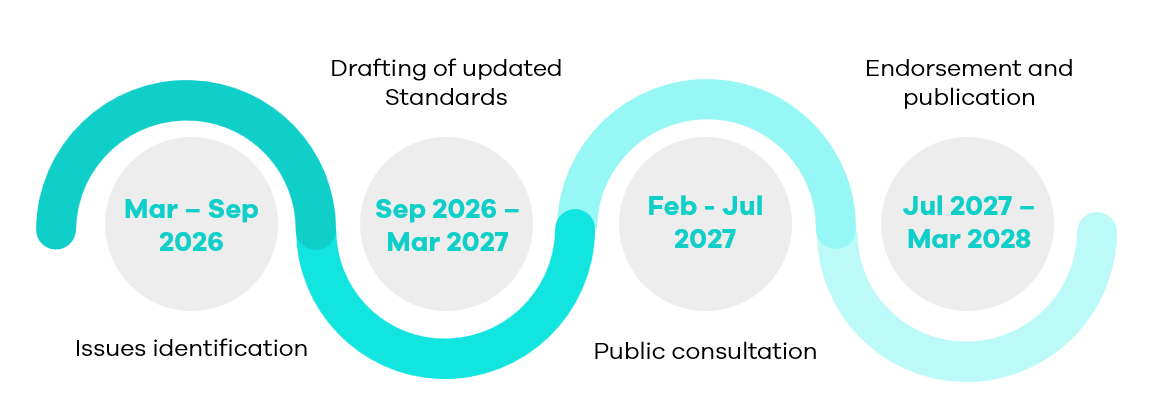
What's included in the review
The review will consider all content within the Standards, including medical criteria, assessment guidance and supporting information for practitioners and licensing authorities.
The review will draw on:
- stakeholder consultation
- contemporary clinical and road safety evidence
- medical, health and road safety expertise
- implementation experience from jurisdictions and users of the Standards
- related national transport and health assessment projects.
Frequently asked questions
About the review
How often are the Standards reviewed?
The Standards are reviewed approximately every four to five years. The most recent comprehensive review was completed in 2022. The current review commenced in March 2026 and is expected to conclude with publication of the AFTD 2028 Edition.
What does the review aim to achieve?
The review aims to ensure the Standards reflect current clinical and road safety evidence and contemporary practice. This includes addressing emerging medical, social and regulatory issues. The review also aims to improve the clarity, consistency and usability of the Standards for health professionals and licensing authorities. The review will result in publication of an updated AFTD 2028 Edition and an accompanying review report documenting the evidence base and rationale for all changes.
What will be covered in the review?
The review will address all content within the Standards, including general content associated with the principles and processes of assessing fitness to drive (Part A), the assessment and management guidelines and licensing criteria for particular medical conditions (Part B), and the jurisdictional information contained in Part C.
In relation to medical conditions and treatments likely to affect fitness to drive, the review will seek to update existing information as well as develop new content required to address emerging issues identified through research and stakeholder consultation.
While the review will update information about relevant road safety legislation and policy in the states and territories, it will not review or make recommendations about that legislation. This includes legislation or policy relating to:
- reporting of medical conditions by drivers and health professionals
- which health professionals can conduct fitness to drive assessments for licensing authorities
- whether certain drivers require periodic fitness to drive assessments (e.g. older drivers, heavy vehicle drivers, and public passenger vehicle drivers).
The NTC welcomes input about implementation issues, including what actions may be required to improve the quality and consistency of application of the Standards. Where relevant and feasible, revisions to the content may address some of these issues. Issues that can’t be addressed in this way will be noted in the project report, with recommendations as appropriate for relevant stakeholders to consider.
What information is used to update the Standards?
The Standards are updated using a combination of:
- Current medical and road safety research
- Data from other safety standards and clinical guidelines
- Findings of road incident investigations and coronial inquiries
- Advice from subject matter experts and specialist working groups
- Feedback from driver licensing authorities, health professionals, industry, consumer groups and other stakeholders
About the consultation
Who can contribute to the review?
The review is open to a wide range of stakeholders, including:
- Driver licensing authorities and government transport agencies
- Medical practitioners, specialists and other health professionals
- Consumer groups and people with medical conditions affected by the Standards
- Industry bodies and operators, particularly those representing heavy vehicle and commercial transport
- Unions
- Road safety researchers and academics
- Any member of the public with relevant experience or interest
How can I have my say in the review?
There are two main opportunities for stakeholders to contribute. The first was the Phase 1 consultation in mid-2026, which focused on identifying priority issues for the review and closed on 17 July 2026.
The second will be a formal public consultation in 2027, when stakeholders will be invited to provide feedback on draft revisions to the Standards. Details on how to participate will be published on the NTC website when the consultation opens.
What happens to my feedback once I submit it?
Feedback informs the drafting of revised Standards and is considered alongside clinical evidence and expert advice. All feedback received during consultation is captured, reviewed and synthesised by the NTC for consideration by expert advisors. A consultation report will be prepared documenting the feedback received and the NTC's response to key issues raised.
Will my submission be made public?
The NTC manages public consultation in accordance with its standard consultation approach. If you would like your submission to remain confidential, please indicate this clearly when you submit. Further information on the NTC's approach to handling submissions will be provided when consultations open.
About the Assessing Fitness to Drive Standards
What are the Standards and how are they used to support road safety?
The Assessing Fitness to Drive Standards are the nationally agreed medical criteria and guidance used by health professionals and driver licensing authorities across all Australian states and territories when determining medical fitness to drive. They set out the considerations and criteria for safe driving and guide the management of drivers with health conditions so they can continue to drive for as long as it is safe to do so. The Standards support road safety by ensuring that drivers with medical conditions or functional limitations are assessed consistently and fairly, based on evidence of their individual capacity to drive safely rather than solely on an underlying diagnosis. There are separate criteria for private and commercial vehicle drivers, reflecting the different risk profiles associated with each.
How are the Standards developed?
The Standards are a joint publication of the NTC and Austroads. The NTC leads the development and review of the medical content in consultation with health professionals, clinical subject matter experts, driver licensing authorities, industry, consumer groups and road safety researchers. The Standards are approved by Commonwealth, state and territory transport ministers through the Infrastructure and Transport Ministers' Meeting (ITMM).
How are the Standards applied in driver licensing?
The Standards contain medical criteria to guide the health professional in determining whether a person with a medical condition or functional limitation is:
- fit to hold an unconditional licence
- fit to hold a conditional licence (which may involve restrictions or requirements to be monitored through regular health assessments)
- not fit to hold a driver’s licence
The driver licensing authority then considers the health professional’s advice, along with other relevant factors, when making the final licensing decision.
There are two sets of medical criteria – one for private vehicle drivers and one for commercial vehicle drivers. The fitness to drive criteria for commercial vehicle drivers are more stringent than for private vehicle drivers due to the higher road safety risks. This means that a person who is assessed to not be fit to drive a commercial vehicle may be able to hold a private vehicle licence, if they meet the private vehicle criteria.
Where can I find the latest version of the Standards?
The current edition of the Standards (2022) is available on the Austroads website. It can be accessed online, downloaded as a PDF, or purchased as a hard copy by contacting publications@austroads.gov.au.
Contact us
- Log in to post comments